Author Archives: Where's Zoe Now?

Unknown's avatar

About Where's Zoe Now?

Late-20s Australian working in Italy, blogging about travel+food+daft adventures.

Via Francigena waymarker

Walking vaguely Rome-wards: Chivasso to Lamporo

This slideshow requires JavaScript.

Obviously the best day to do a 25 km walk with minimal shade is a muggy, hazy day, one where you can’t see any distant scenery and sunburn is inevitable. It’s what anyone would do, right? Guys?

At any rate, it’s what I did last Saturday. In numbers:

  • Hours in advance I’d planned this: 12. I was feeling energetic Friday night, and at some point I decided I should continue with this ‘walking to Rome‘ business. A bit of quick Google-map-ing and I figured I knew what I was doing.
  • Kilometres originally planned to walk: 13.5. You know, a reasonable 2-3 hours. But “just in case I was feeling extra energetic”, I looked a bit further ahead and planned a longer route: Chivasso-Lamporo, ~20 km on the via Francigena and then an extra 4.5 km Lamporo-Crescentino train station. Really, given the option of a longer walk, what did I think was going to happen??
  • Number of snakes spotted: 3. “There are no venomous snakes in Piemonte” became my motto. If that isn’t true, please don’t tell me. The worst was when a snake and I startled each other on an over-grown bit path, one of the few bits of the route that wasn’t a road. “Oh my goodness!” I sad aloud. Fortunately, the snake didn’t reply. That was the one point I wished I was with a group, so I could be the one faux-cheerfully saying “There are no venomous snakes in Piemonte, let’s go!” It’s less convincing when no-one is listening.
  • Number of frogs: dozens. As I was walking next to irrigation canals they’d jump in when I went past. Plop, plop, plop. I whistled “Galumph went the little green frog” as I walked. I hope the frogs only know the first verse and chorus.
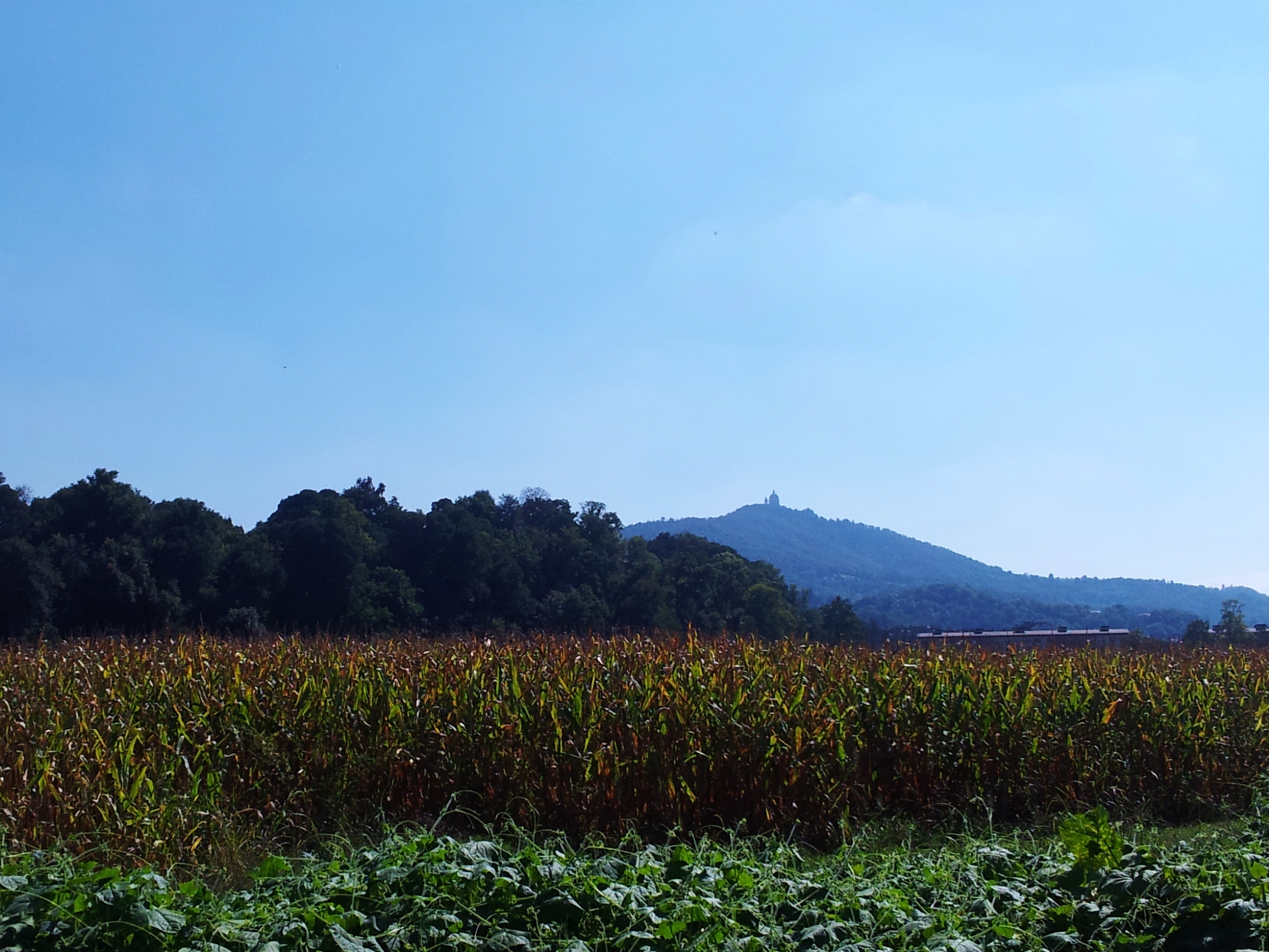
  • Number of corn fields: All of them. Every single corn field. So. much. corn. I was so excited when I came across a rice field towards the end of the day. If I were an actual pilgrim, I’d be doing insanely long days just to get out of the plains as quickly as possible. But… there is something to be said for long boring walks. After the first hour or two, you start to accept that nothing much is going to happen, and you end up doing all the thinking and daydreaming you’d been putting off for the past while.
Trogir, Croatia

Sun and sea and ancient cities — Trogir and Split

Some more notes from Croatia.

  • Spent 2 nights in Trogir, which is more or less a suburb of Split, but on an island which is neat, even if it’s only an island that you get to by bridge, not an island you get to by boat. The name “Trogir” will never not make me think of “Trogdor” — why yes I have moved in nerdy circles for at least 10 years, why do you ask?

    20140810_203347

    This is actually the new town. Now imagine how nice the old town is. You have to imagine; I didn’t bother to take any photos.

  • The hostel in Trogir is next to a small square, with a big shady tree and a tiny church. At night, the hostel guests sat around on the plastic chairs under the tree, drinking beer from the nearby convenience store and smoking and swapping notes on where they’d been. The local kids would play soccer in the square, using the church doorway as one of the goals. The hostel owner would sit and chat and occasionally arbitrate in disputes between the kids. “You should send the parents the bill for babysitting,” I joked. “Oh no way,” he said. “Then I’d have to be responsible for them!”
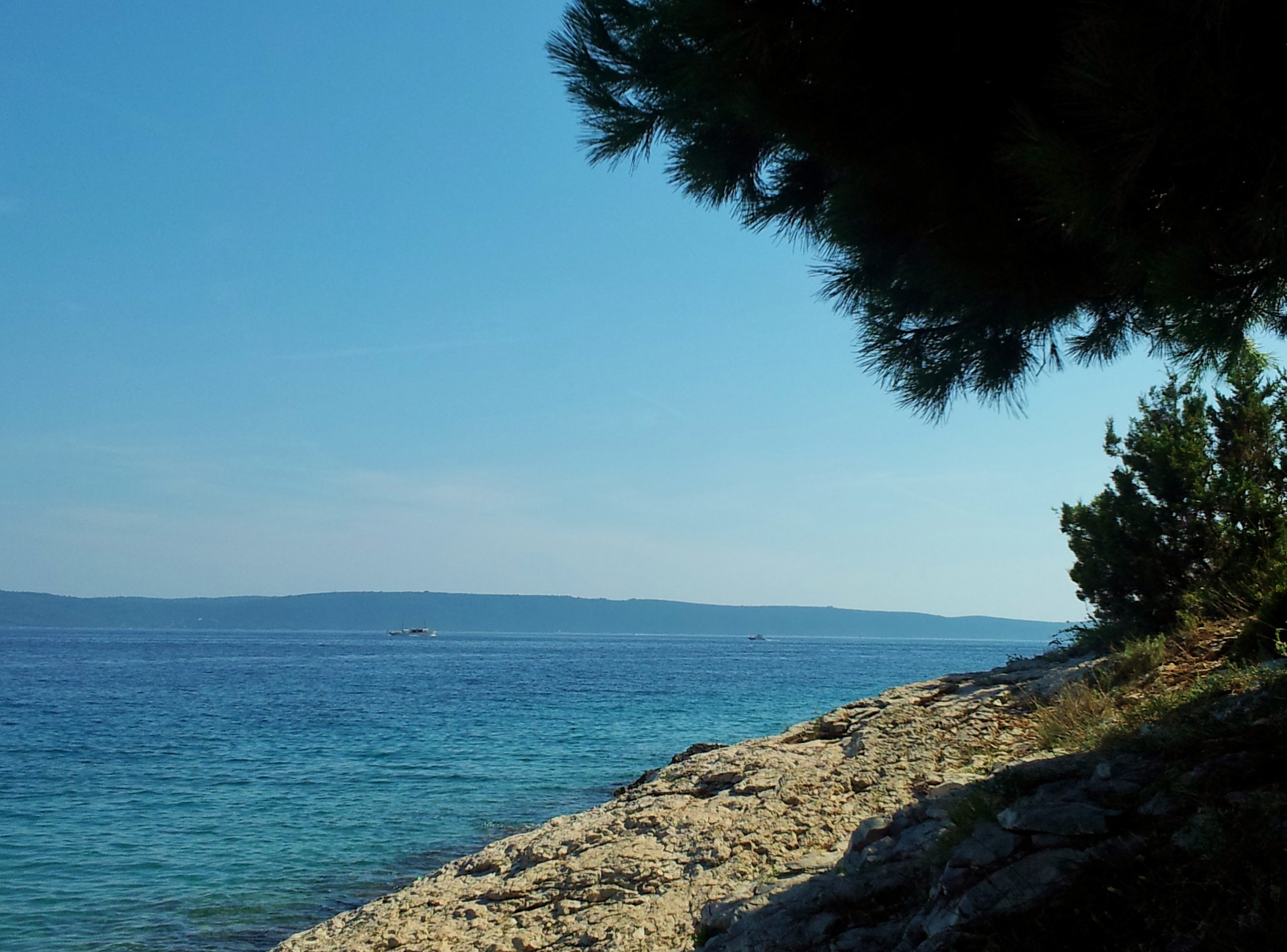
  • There’s not much to do in Trogir once you’ve walked through the old town, except find a beach and relax and watch the planes fly into nearby Split airport. As I learned while drinking beer under the tree, the secret to finding a good beach is to slather on the sunscreen and take a walk to the far side of the island, to where the locals go. I failed in the first step and got horrendously sunburnt, but the perfect clear water more than made up for it.

    Ahhhhhh...

    Ahhhhhh…

  • I only gave myself a morning in Split, figuring it would be over-touristy and underwhelming. It was certainly full of tourists, but if you treat it as a sort of Disneyland for ancient Roman nerds, it was rather fun. I had enough time to climb the cathedral tower, which was an occupational safety nightmare with 2-way traffic on steep, narrow, slippery stone stairways. But they kindly let me leave my heavy backpack at the bottom, and the views were amazing.
    Behind the pretty facade lurk terrifying stairs...

    Behind the pretty facade lurk terrifying stairs…

    ...but this sort of view is why you climb it.

    …but this sort of view is why you climb it.

In fairness, what I’ve left out of this write-up is that the area is somewhat industrial, the suburbs of Split do sprawl, and if you go to the beach in the wrong spot you’re liable to have a ciagrette butt float past you. Dare I say it, the beaches are cleaner and prettier in the south-west of Australia (but oh my goodness the water is so much warmer in Croatia!) If I were to travel here again, I’d rent a car and head further along the coast until I found somewhere a bit less crowded. But I would also spend some more time in Split and try to see it properly, and I’d definitely drop in at Trogir in the evening and see if the kids have managed to work out who’s goalie yet.

Festival delle Sagre, Asti, Italy

The time I ate donkey meat – festival delle sagre

“Does asino mean what I think it–”

“Sure does.”

“Alrighty then. How many plates shall we get?”

Asino is Italian for donkey, and the context was a food stall selling meat-stuffed pasta. I’d gone with some friends to the Festival delle Sagre — the Festival of Festivals — a weekend food festival in Asti, south of Torino. Imagine an agricultural show/county fair with a ferris wheel, but with almost all the exhibits being food stalls. There must have been at least 50 of them. And not nasty showgrounds food. Each stall featured one or two freshly-made dishes, the local specialties of villages in a region known internationally for its food.

And now add in the fact that every stand has wine, typically included in the price of food. And you can buy an empty glass that comes with a holder so you can wear it around your neck as you walk around. Genius!

WINE HOLDER

WINE HOLDER

As soon as we’d arrived, we realized we were going to need a strategy for all this. We started with a reconnaisance — walking around, sussing out what options there were. Truffle risotto! Polenta with wild boar! The options were dizzying. By the time we were halfway through our recon run, it was getting hard to not buy everything in sight.

Once we had the lay of the land, we decided on our first stop, which was by far the highlight of the savoury options — friciula, a fried bread-y-pastry-y thing, with fatty pancetta. It came recommended to us, and it was a good call. Fat and starch and salt and everything delicious. “It’s funny, everyone back in England seems to think Italian food is healthy,” said S. We looked at what we were eating and laughed.

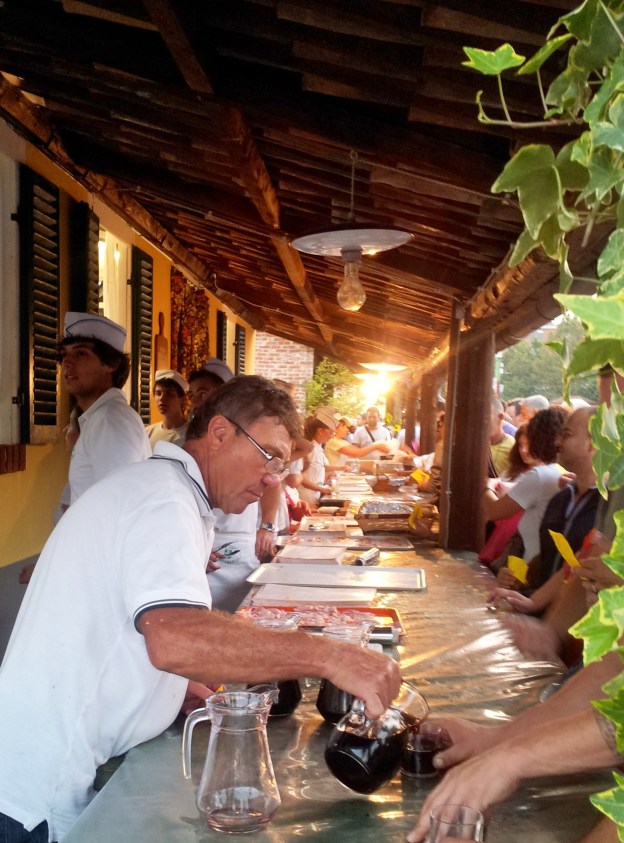
Hard at work serving wine to wash down the artery-clogging goodness.

Hard at work serving wine to wash down the artery-clogging goodness.

Our second stop was the agnolotti d’asino, the donkey pasta. I have to admit, I’m not really a huge meat eater and while I could tell the pasta was different to others I’ve had, I don’t know how much was the donkey meat and how much was the flavourings they used. It was tasty, but. And a good discussion starter — if horse is ok to eat, why not donkey? Or to go a step back towards Australian thinking — if cow is ok to eat, why not horse…?

While we were walking around, thinking about what to get next, we hit on the optimal food-finding strategy: hang around the central area where the tables were, look at what other people are eating, and if it looked good, ask them where it was from. It was through this, plus a discussion of whether polenta is similar to ugali, that we ended up with polenta and wild boar stew. (The verdict: polenta is not like ugali, but it is good.)

At this point we were extremely full. “No you finish the polenta; no you; no really, I can’t” level of full. We had to make some serious decisions about desserts. I think we got it right: zabaglione (custard but amazing custard made with wine not, like, custard powder custard), and “chocolate salami”, which is possibly the best chocolate slice I’ve ever had (it doesn’t contain salami, if you were wondering). Two very different options, both delicious.

It was a happy sleepy train ride home, full of food and wine. We are so doing this again next year.

A walk out of town

The other week, as I was popping down to the shops to buy some eggs, I noticed an odd sticker on a lamp post. It was a cartoon-ish figure of a pilgrim, and below it was an arrow labelled “Roma”.

“Odd choice of street art,” I thought. Except there, across the street, was another, placed exactly as if to show hikers that yes, they were right to cross the street and keep going.

Turns out, I live on a walking trail, the Via Francigena. Or rather, one of the Vie Francigene, since it turns out there’s several routes which diverge and converge as they make their way towards Rome. This clearly needed some exploring.

So after lunch I set out again towards the shops, and kept going. The trail headed for the river and more or less followed it exactly.  That day, I made it to San Mauro, about 10km from central Torino, before I turned back and walked down the other side of the river.

Trail sign! Rome seems and implausible goal.

Trail sign! Rome seems an implausible goal.

Going past the Jewish section of the cemetery on the way to the river.

Going past the Jewish section of the cemetery on the way to the river.

This lamp post will be warm in winter.

This lamp post will be warm in winter.

Under the bridge.

Under the bridge…

20140830_185742

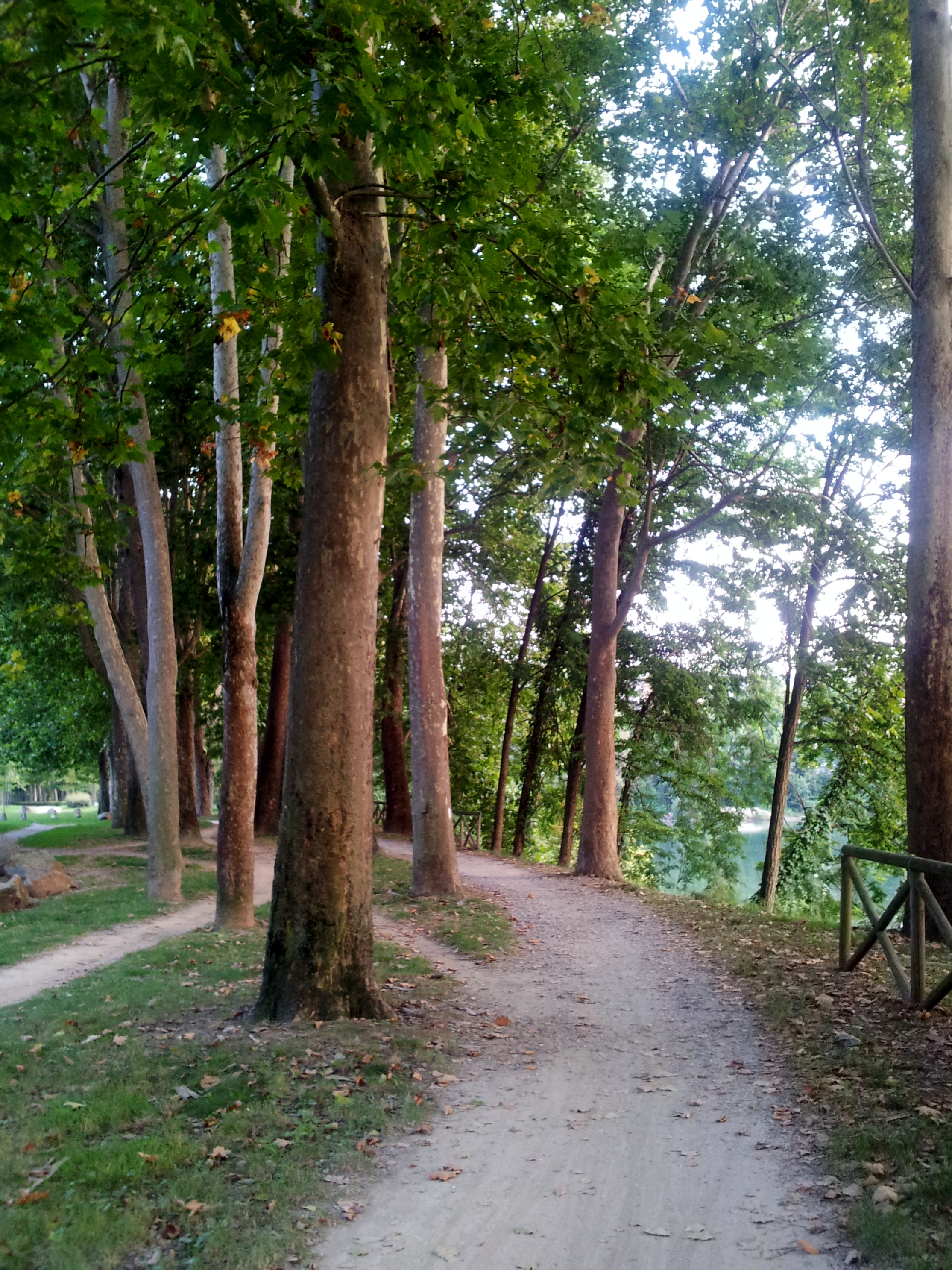
And through the trees.

So obviously, having reached San Mauro, the obvious thing to do was set out the next Saturday, get the bus to where I’d left off and keep going. The first 10 minutes was through the suburbs, and I wondered if I’d misjudged and was about to spend the next few hours walking past peoples’ apartments. From one of them, I could hear someone practising the piano, and old tune I couldn’t quite place (and they couldn’t quite play). It was a hot afternoon, and I was tempted to bail or at least make a substaintial gelato break before I went any further. But once I reached the farmland it was good going:

Country style trail marker!

Country style trail marker!

Looking back on the Superga.

Looking back on the Superga.

Navigation was never difficult.

Navigation was never difficult.

On the banks of the Po.

On the banks of the Po.

Peaceful afternoon.

Peaceful afternoon.

It took me a bit longer than I’d planned and I developed a good sized blister  on the ball of my left foot, but I made it the 19 km to Chivasso which conveniently has a regular train service back to Torino. (I certainly wasn’t walking back!)

So. On to Rome??

Zagreb to Split by overnight train.

Yeah, so this blog is rapidly turning into a collection of “Zoe catches a train” stories and I don’t care. As an aside, I definitely get it from my parents: a few years ago they took a trip around the US by train which from their accounts sounds amazing but if you know them you can just imagine Dad geeking out about AMERICA!!! the whole time and Mum being the most organized person to ever take a multi-week trip with only a small carry-on bag. Like I say, I get it from them.

So there I was at Zagreb’s main train station at 10.30 pm, peering into the train that was going to trundle down to Split overnight. It was a cool evening and I was glad I’d changed into jeans before I left my hostel. Almost everyone else on the platform was a backpacker, presumably with the same idea as me: get to the coast, with a night’s accomodation, for around 200 kuna (~30 euro). My ticket was for a seat, which I was quickly realizing was going to be a bolt-upright seat in a compartment of 6 — 3 facing 3. Uh oh. I can sleep on planes, but I need that 1–2 inches of reclining and I prefer not to have to negotiate leg room with the stranger facing me.

I kept walking along the train, and I’m glad I did because right at the end was the one car that had couchettes. A horizontal bed! What luxury! I found the conductor, and she had a spot available, for 13 euro (euros, not Croatian kuna. Huh?). I’ve paid more than that for mediocre sushi in Torino. Easiest sale she ever made.

I started to see why it was only 13 euro when I got into my compartment and there was zero aircon. It was sweat-pouring-down-your-face hot. There wasn’t much of a common language between the 6 of us in the compartment, except for the phrase “very hot” which we all agreed on, except for the Serbian lady who was apparently completely unaffected by heat and kept her cardigan on the whole time. As I was settling in for what promised to be a sticky night, I heard a girl in the next compartment say “Maybe we won’t be able to sleep, we’ll just have to party all night!” I got my earplugs out.

Once we got moving, the open window made a huge difference to the temperature and I ended up dozing beautifully, rocked by the motion of the train and the low background noise of the diesel engine (Ms Party All Night seemed to have slept, too).  I say dozing, because it’s hard to fall into a deep sleep when you’re on the upper (3rd) bunk and the straps that are supposed to stop you from falling out and breaking your leg are only tenuously attached.

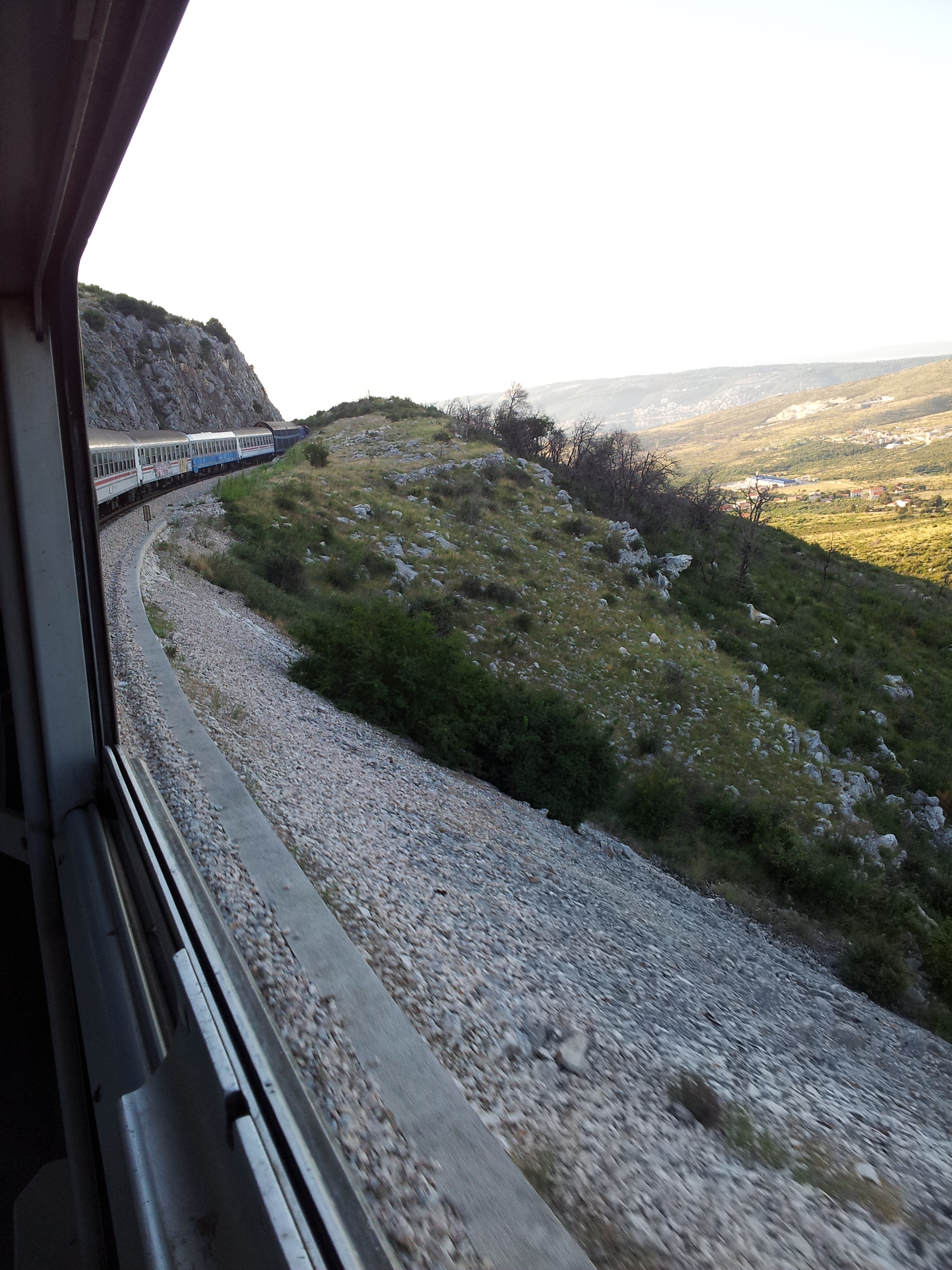
But light sleep means you catch the early morning light, which makes everything worthwhile:

I swear my phone has an anti-Instagram filter and real life looked 20x more magic-light than this.

I swear my phone has an anti-Instagram filter and real life looked 20x more magic-light than this.

Yup I'm in a train.

Yup I’m on a train.

Practical details for future reference: You can buy tickets at Zagreb station and don’t particularly need to book in advance as far as I can tell (though I don’t know if the ticket window stays open as late as the train departure — I bought my tickets the day before). The lady at the ticket window didn’t mention to me there were couchettes, which is how I ended up with a seat ticket, but they do exist! The train leaves Zagreb at 11-ish and arrives in Split at 7-ish, at the train station which next to the bus station and the ferry terminal.

Summer reading: “Too much happiness” (Alice Munro) and “Gabriele D’Annunzio: Poet, Seducer, and Preacher of War” (Lucy Hughes-Hallett)

I took 2 books with me on vacation this year, and both have stuck with me, for very different reasons.

The first is a short story collection, Too Much Happiness by Alice Munro. “Ooh, short stories!” I thought when I bought it. “And apparently Munro mostly writes about day-to-day things. This will be good for dipping in and out of.” Tell you what, I had to dip out after every story just to catch my breath. I’m not even sure what the right word for this book is — haunting suggests the wrong atmosphere because the stories aren’t otherworldly at all; beautiful clarity is what the blurb says, but that doesn’t express the darkness that’s never far below the surface of ordinary human interactions; I think I said devastating in a facebook post but that’s not quite right either. I’ve hung onto the book so I can re-read later, but already it has burrowed into my brain and I suspect it’ll pop into my thoughts when I least expect it.

The other book was Gabriele D’Annunzio: Poet, Seducer, and Preacher of War by Lucy Hughes-Hallett. I don’t even remember how I came upon this. A review somewhere maybe? It’s a biography of Gabriele D’Annunzio, who was an Italian poet and political figure in the early 20th century. Possibly I had never heard of him before because people would rather forget him? — he is most infamous for leading an invasion of the city which is now Rijeka in Croatia, without the official support of the Italian government at the time.

From the start, I was hooked. In some ways, the subtitle of the book should really be “Can you believe this jerk???” because this guy really was a nasty piece of work, so reading was a bit like watching a train wreck. He starts off as a poet who’s obsessed with fame, once he’s famous he uses that fame to do whatever he likes, including plenty of womanizing that leaves his lovers at best emotional wrecks, and then moves in to politics. The kicker is that he was vehemently pro going to war in 1914, mostly because it suited his aethetic ideals about countries being founded on the blood of young men. Hughes-Hallett doesn’t use the word “sociopath”, but I will.

But wrapped around all of this is not just a history of Italy at the time but also of intellectual fashions and popular world views. Because D’Annunzio didn’t live in isolation, and if his (horrible) views and actions didn’t resonate with others, he wouldn’t have gotten very far. For instance, something that comes up a lot is the late-19th-early-20th century idea of “beauty” being everything and if you’re making beautiful things then traditional morality is beneath you. And it’s true that making beautiful things is a good thing to do, but over the course of the book you see the idea being caught up in some really ugly selfish behaviour, because it is a selfish way of thinking. In the end, I was just as much challenged by the question of what unexamined ideas do I have about the world that are ripe for being exploited for bad ends?

(My only complaint about the book is that it could have been about 25% shorter — but that could just be because I had to carry it around in my backpack!)

Zagreb: my kind of city

Collage1
Zagreb, for me, was full of surprises.

I’d had a look at a Lonely Planet guide before I left home, which asked “Is Zagreb worth visiting?” It answered with something vague that suggested you may as well stay the night if you had to stop there on your way to the coast. I think it even used the word “pleasant”.

Let this be a lesson not to rely on Lonely Planet. I loved my 2.5 days in Zagreb.

It started as soon as I got off the train. The weather was perfect, and at 5pm the afternoon light was magical. Unlike Ljubljana, where I had come from and where the train station faces onto a bus station and some dreary office blocks, Zagreb station is near the centre of town and faces a grassy square with trees and surrounded by beautiful buildings. It was so pretty my diary from that day took a turn for the teenage-girl-ish: “I felt I had arrived.”

Overwrought sentiment aside, the city benefits from a strong Austro-Hungarian influence on the architecture, but it’s not a museum and mixed in are elegant 1920s apartment blocks, some modern city buildings, and even some art deco. The blend makes it perfect for strolling, which goes well with the sheer number of cafes in the city — my pattern was walk around a bit, have a coffee and read some of my book, repeat repeat repeat. I could live like that.
Other things I did:

  • The evening I arrived, there was a free organ & violin concert in the cathedral. Heck yes free concerts. And it got me to sit down for an hour in the cathedral and actually look at the art, which is pretty great for me who normally does a 2-minute lap of a church and then walks out again.
  • The Museum of Broken Relationships, which is the one museum that seemingly every backpacker who goes to Zagreb visits. It lives up to the hype. If you’re a sap like me, bring tissues. (I didn’t, and had to suppress every thought of “he left her then??” and focus on giggling about the Toaster of Vindication until I got out.)
  • The other museum I went to was the Croatian Museum of Naive Art, which I enjoyed although I wish there had been more explanations. Like, one of the artists had a chicken in almost all his paintings on display. Did he just like chickens? Did it have a symbolic significance? I started to make up my own interpretations. The chicken stands for human unwillingness to face life’s deep questions.
  • Maksimir Park was well worth the walk out of town. It’s a really well designed city park, very peaceful with beautiful gardens. And apparently one of the first free public parks in Europe.

Bits and pieces from Slovenia

A few more memories from Slovenia that didn’t fit in any other post…

  • Not having enough water with me for the train ride to Bled, and trying to convince myself that eating the tomatoes I’d grabbed from the fridge on my way out of Torino that morning would serve me for rehydration. Two simultaneous truths: tomatoes aren’t that great for thirst; I was never really so thirsty that ‘rehydration’ was actually necessary.
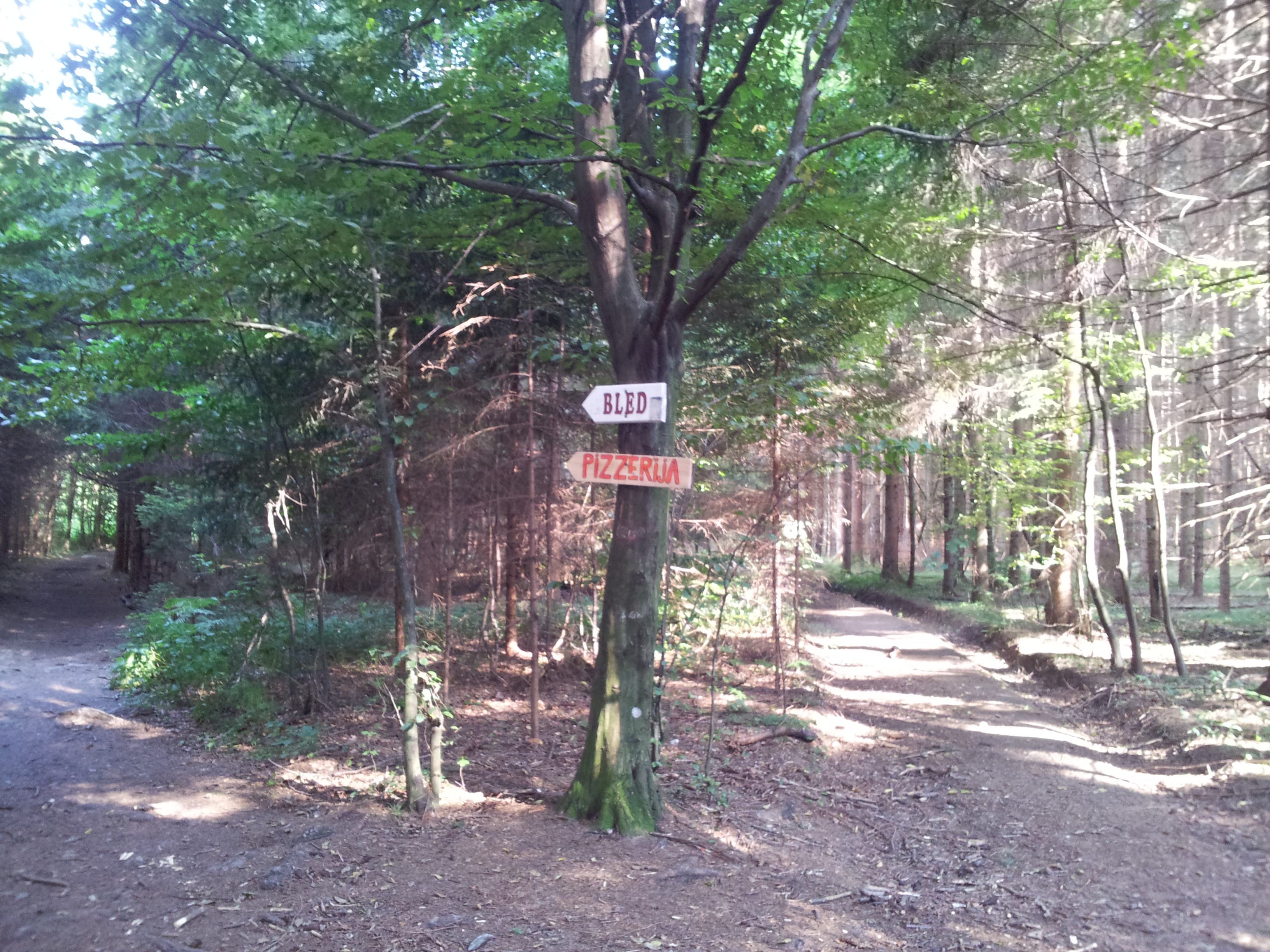
  • Two roads diverged in a yellow wood… and I took the one for the pizzeria, obviously:

    Pizza this way

    Pizza this way

  • Also in Bled: a group of german teenage dirtbag Scouts, hanging around the bus station waiting for a taxi after missing the last bus to wherever it was they were going. Imagine a 1.5 litre plastic bottle of beer shared around, cigarettes, each of them wearing Scout scarves round their neck while trying to impress each other by melting bits of rubbish with their lighters (something something shouldn’t they have been using 2 sticks…)
  • Eating a horse hamburger in Ljubljana, which was very tasty (something something unknowingly eating horse hamburgers already in the uk) but it came in a bun that was the size of my face, filled with sauce. It defeated me.
  • Ljubljana was also where I met my first ever real life travelling-around-europe-on-a-gap-year girls. We were discussing our travels over breakfast in the hostel with a Croatian woman who was in Ljubljana to take her daughter to a figure-skating camp.
    “So then we got the train from Sofia to Zagreb,” said one of the girls.
    “It was 27 hours,” added the other.
    “Sofia? To Zagreb?! By train??! That’s… enthusiastic,” said the Croatian woman. She turned to the guy at the reception desk at the other end of the room. “Did you hear that? These girls, they got the train! from Sofia to Zagreb! Why?!”
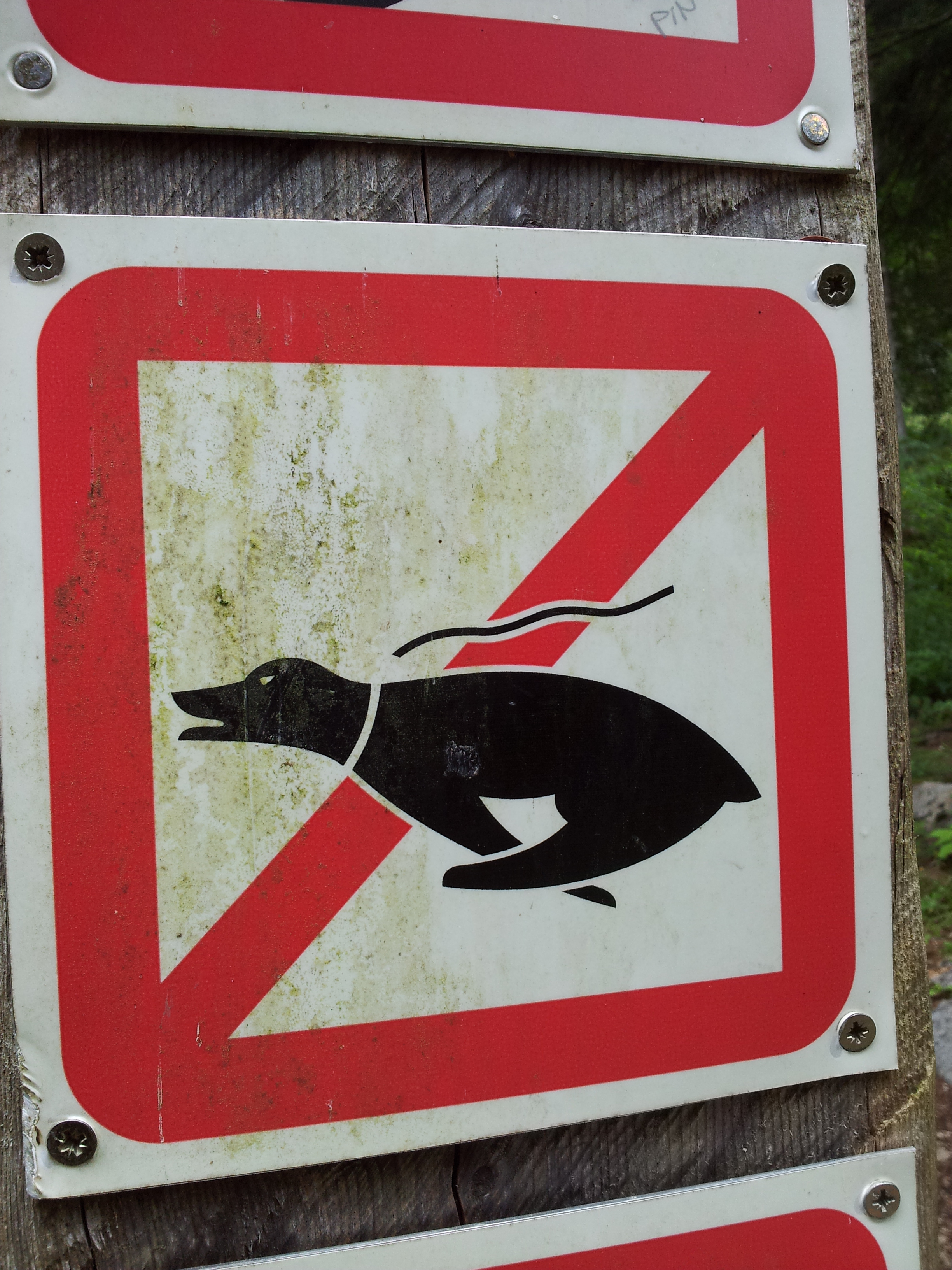
  • My favourite “no dogs” sign ever, at Lake Bohinj:

    Only unexcited dogs allowed.

    Only unenthusiastic dogs allowed.

Velika Planina: a highlight of Slovenia

I’m back in Torino “summer” (I think there have been about 6 sunny days so far this year) so it’s time to relive some more vacation highlights.

“It’s good working here over summer, there’s plenty of tourists who I can practise English with,” said the barista at the cafe in Kamnik. I had to smile — I was just thinking how few other tourists I’d seen so far on my way out of Ljubljana and up to the mountains. I was heading for the ski lift at Velika Planina, which, according to a friend of a friend was a good spot to visit alpine meadows. The barista agreed. “It’s a really pretty place,” she said. “Great for hiking.”

“Really pretty” is an understatement. This was one of the highlights of my trip:

View at Velika Planina

Not bad eh?

Conveniently for lazy people like me, there’s a ski lift that they keep running in summer, so you can get to views like this without having to hike up yourself. (My totally legit excuses: it was already nearly lunchtime by the time I got to the bottom of the valley thanks to the not-great public transport schedule out of Ljubljana; it was a hot day and the sun was out in full force; I had already hiked strolled on flat ground the 2 days before; if the family with small children who arrived at the same time as me could get the lift, so could I.)

Once you get off the lift, there’s an easy walk of about 40 minutes to get to the traditional cow-herds huts:

Huts at Velika PlaninaApparently these are mostly (all?) reconstructions after a fire in the mid-20th century, but it took quite an effort to get them reconstructed as huts and not a state dairy farming collective. I think everyone’s pretty glad the effort was made — can you imagine a tourist campaign to come see the drab communist buildings on top of the mountain?

As I got closer to the village, the sound of cowbells, which had been faint near the ski lift, got louder and more constant. Although, as far as I can tell, many of the huts are now holiday homes, people still keep cows up in the meadows. They’re pretty chilled out cows, especially considering they have to share their space with hikers.

Cows at Velika Planina

mooooo!

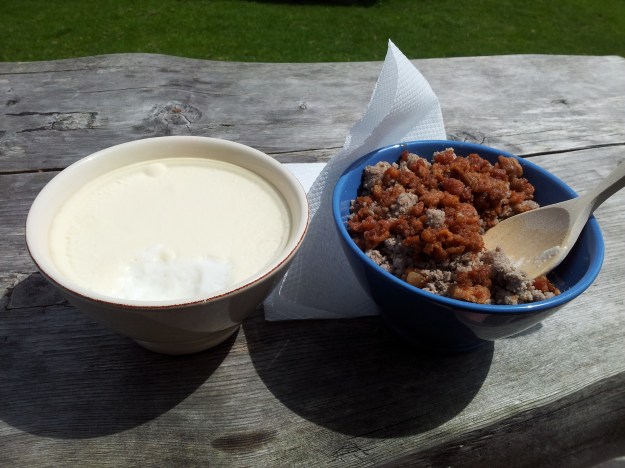
I had brought some lunch but it turns out I didn’t need it, since you could buy delicious mountain food from one of the huts. Trust me, you will never feel more like Heidi than when you’re eating this, though I don’t think Heidi ate from an Ikea bowl…

Mountain lunch at Velika Planina

Left: sour milk, which is a bit like yoghurt. Right: meat and grits.

It was super tasty, and very filling. Almost enough to make me feel guilty about not hiking up from the valley. (No, not really.)

After lunch, I wandered around for a few hours, oohing and ahhing at the views of the mountains in one direction, and the plains in the other. I think I said to myself “this is so perfect!” about 75 times that day. I did consider hiking down just to work off the lunch, but in the end I took the lift, to make it pretty much the ultimate low-energy but still-satisfying walking day. Definitely recommended.

Practicalities for future reference: You can do this as a day trip by bus although car would be much more convenient. Different people said different things to me about how frequently the lift goes up — every half hour? every hour? At any rate, it runs until 6pm during the week and later on weekends. There’s a campsite at the bottom of the ski lift if you want to overnight. It also has ‘glamping huts’, which are more or less wooden garden sheds with beds (which I stayed in and liked just as much as any dorm room; if you want one in high season you should probably call and book — I got lucky there was 1 free when I rocked up).

Lake Bohinj: better than Bled?

Woke up early this morning and have 4 hours until my bus leaves, so I guess it’s time I sat down at the hostel shared computer and wrote about Lake Bohinj. (Excuse any crazy typos, it’s a croatian keyboard…)

My second day in Bled started with a lazy morning in the hostel, drinking nescafe (it was free, don’t judge me) and chatting and playing Jenga with an Irish guy and an aussie girl who had never played Jenga before and a dutch couple who insisted the rules were you could only use one hand in a turn, you couldn’t alternate right and left to ease a block out. There was talk of hiring bikes and going to some waterfalls, once everyone had gotten up and dressed and we’d found out where these waterfalls actually were.

Around eleven we’d worked out the plan — it turns out the ‘waterfalls’ were actually Vintgar Gorge, which I’d been to the day before, and liked, but not enough to go there a second time. So with that we went our separate ways, the group off to Vintgar and me down to the bus station to see where I could get to easily in the area.

As it happens, there was a bus fairly soon to Lake Bohinj, which was about half an hour away. I’d heard of it before as ‘the other lake in Slovenia; some people say it’s nicer than Bled’. Time to test that theory then.

‘Some people’ are right.

Lake Bohinj, Slovenia

Perfect mountain lake.

Where Bled is quite built up, with its resorts and a substantial town on its shores, Bohinj is more of a large mountain lake that you could imagine hiking to and camping by. It was an overcast day when I was there, and everything was in shades of grey and green and blue, save the odd bright orange canoe and a white streak of a reflected church tower. Though it was hardly deserted, none of the crowds of Bled were there, and none of the bars and the boat hires every few hundred metres along the shore. Just mountains, trees, and a lot of water.

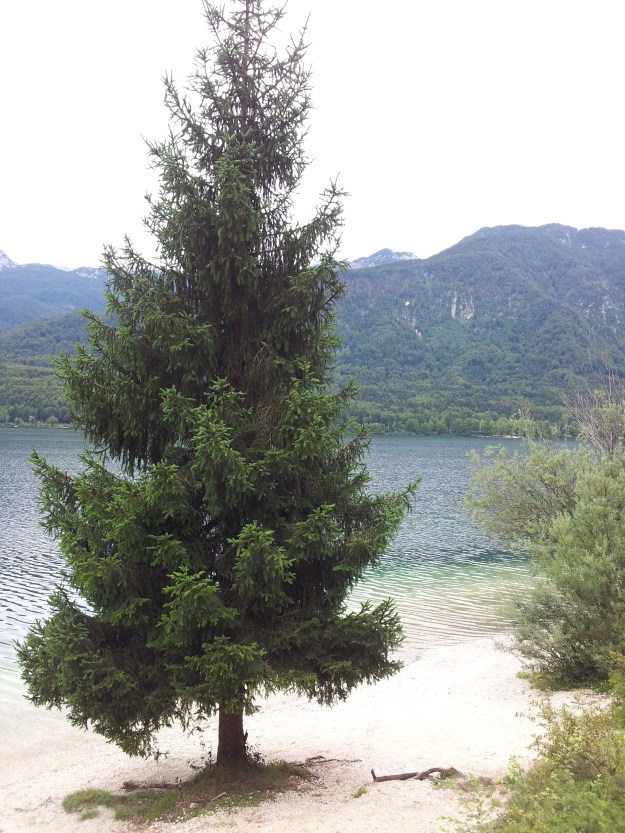
Lake Bohinj

Little beach with a tree.

I guess the reason Bled is more popular is that its water is much warmer – I took a quick dip in Bohinj before lunch, and a quick dip was plenty for me. It’s definitely more of a lake to walk around, or paddle on. I walked all the way around, with frequent stops to admire the views.

Lake Bohinj, Slovenia

Dramatic clouds and still lake.

So yes, count me as one of the ‘some people’ who prefer Bohinj to Bled.